
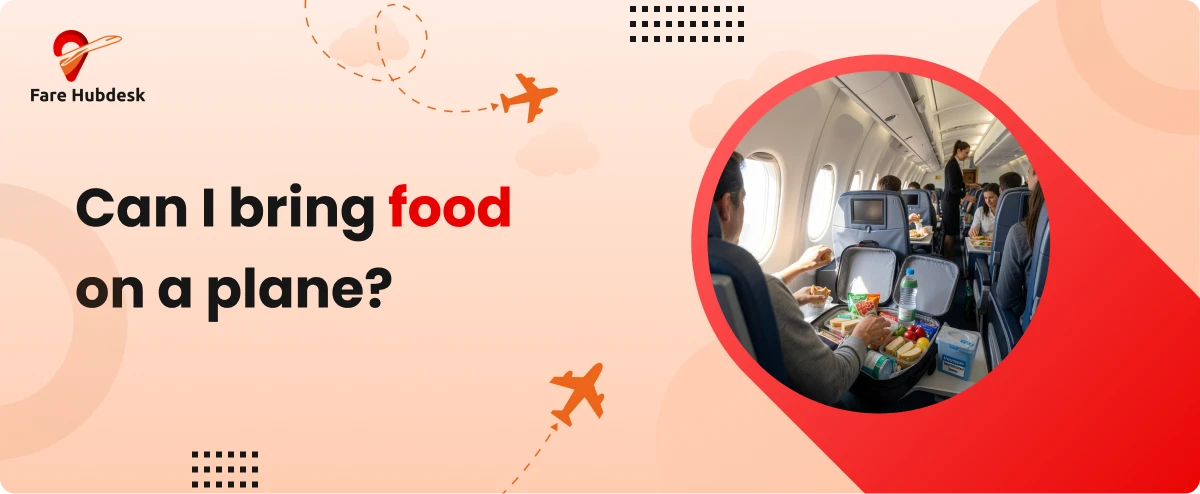
While traveling on a flight, the passengers may get confused because the regulations for different items are very different. If you are thinking, " Can I bring food on a plane? Well, the answer is yes, you can, but the regulations for various food items are different. However, if you are planning to take food on a flight, then you can do it easily. Here we have covered all the items that are allowed inside the flight, and the list of items that may have some regulations.
Read the blog carefully and know about the regulations for carrying food and also about which items is allowed inside the flight and which items can be carried but with rules applied, also know about items that don't have any regulations.
Can I Bring Food on a Plane?
While traveling in flight, you must think, " Can I bring food on a plane? Well, the answer will be yes. If you are traveling from the USA or to the USA, you will carry any solid food item that is solid with you without any regulations. The airlines may apply rules for carrying liquid items inside the flight if it is more than 3.4 ounces in weight. Here are some of the items that are allowed inside the flight:
- The airlines may impose restrictions on carrying liquids in carry-on bags
- No restrictions are applied to items that are packed in a checked bag.
- Liquids that have more than 70% alcohol
- The regulations are simple for baby foods and homemade foods.
- The items that are purchased at the airport can be carried inside the flight.
What are the Rules for Bringing Baby Food?
Airport security procedures treat baby food and infant nutrition products as special items. These products qualify as medical liquids which permit users to carry more than the standard liquid restrictions.
- The 100 ml limit does not apply to baby formula, breast milk, toddler drinks, or baby food.
- The items need to be contained within a quart-sized liquid bag.
- The security screening begin when travelers disclose their travel plans to security officers.
- The testing process for baby food safety requires separate testing of various baby food products.
- Travelers may bring ice packs and freezer packs to maintain the temperature of their baby food.
Rules for Carrying Liquid
Security regulations at airports prevent passengers from bringing liquid and gel food items into their carry-on luggage. The checkpoint's security process requires containers to meet specific size requirements so that all items can be processed without delays.
- The airport security regulations establish these main liquid requirements:
- The maximum size of liquid containers which passengers can bring in their carry-on bags is 100 milliliters.
- Passengers must store all liquids inside a single quart-sized transparent bag.
- The liquid regulations apply to items which include sauces, yogurt, honey, peanut butter, jams, soups, and drinks.
- Passengers must pack all liquids that exceed the authorized size limit into their checked luggage.
- Security personnel may request that travelers take out their liquids so that their liquids can undergo different testing procedures.
Rules for Food Purchased on Airport
Travelers are allowed to bring food and drinks that are purchased after the security checkpoint. The secure area allows customers to purchase items which have already passed through airport security checks.
- The general rules permit passengers to carry food, snacks, and drinks which they bought at the airport onto the plane.
- Passengers can bring from the security area any items which they purchased after passing through security.
- Passengers can bring coffee, water, and juice onto the aircraft.
- Passengers must wait for the cabin crew to serve their airport alcohol purchases before they can drink it.
- The customs regulations require that some remaining food must be thrown away before international arrival.
What Are the Regulations for Carrying Solid Foods?
Passengers are permitted to bring solid food items on flights which they can store in both their carry-on bags and their checked luggage. The foods can be taken through airport security because they do not meet the criteria of liquid restrictions. The security officers at the airport possess the authority to request that passengers separate their food items during the screening process when those items obstruct clear X-ray imaging.
- Passengers can bring solid foods which include bread, sandwiches, cookies, crackers, snacks, and candy.
- Passengers are allowed to bring dry items which include nuts, dried fruits, cereal, tea leaves, and spices.
- Both carry-on and checked baggage can be used to transport cooked meat and seafood and vegetable food items which do not contain any liquid.
- Passengers must remove their food items for inspection when screening takes place.
- The security process becomes faster when passengers maintain their carry-on bags in an organized and uncluttered state.
Rules for Home-Packed Food
Your home-packed food needs to meet airport security regulations for your flight. The airport security permits passengers to bring solid foods through both carry-on and checked baggage but liquid and gel foods require special security screening procedures. The inspection process becomes easier when food is packed in sealed containers which show proper organization.
- Passengers are permitted to bring homemade solid foods which include sandwiches, cooked vegetables, bread, cookies, and snacks in their carry-on and checked bags.
- The 100 ml / 3.4 oz liquid rule applies to all liquid and semi-liquid foods which include soups, sauces, yogurt, and gravy that passengers carry in their bags.
- Passengers should store their larger liquid food items in their checked baggage.
- The security staff needs to separate food items from their original packaging during the inspection process.
Regulations for Pet Food and Other Food Items
Pet food and certain specialty food items can also be transported during flights, but some rules depend on whether the item is solid or liquid.
- Dry or moist pet food is considered solid food and is allowed in both carry-on and checked bags.
- Wet pet food must follow the 100 ml liquid rule in carry-on bags.
- Powder items like protein or energy powders over 12 oz (350 ml) may require additional screening.
- Frozen food items are allowed if ice packs are completely frozen during screening.
- Melted ice packs or ice slush must follow the regulations imposed for liquid.
Regulations for Other Food Items Not Mentioned Above
Passengers on flights are permitted to bring various food items which must comply with established airport security regulations. Passengers are allowed to bring solid foods in their carry-on and checked baggage. They must follow liquid restrictions during screening for all foods which they consider to be liquid or gel foods. The X-ray screening process requires extra inspection for items which show unclear results during the examination.
- Canned foods require extra screening because they are better suited for transport through checked baggage.
- The security process requires extra checks for protein powder products which come in containers larger than 12 ounces.
- The checkpoint permits frozen foods as long as they stay completely frozen during the screening process.
- Gel ice packs used to keep food cold must be frozen solid or follow liquid restrictions.
- Some unusual items (for example live seafood) may be allowed but their acceptance depends on both airline policies and packaging needs.
- The airport security process becomes more efficient when travelers maintain their food items in proper packaging which allows for quick inspection.
Conclusion
The passengers can take food inside the plane, but the regulations for carrying food change based on the food item they are carrying. We have covered all the regulations in the blog in detail, so you can get the answer of can i take food on a plane? The TSA regulations are not that restrictive; these are made to ensure the safety of air travelers and the staff members. Read the regulations for different items and carry them according to the rules to avoid long lines or lengthy processes at the airport.The TSA regulations are not that restrictive; these are made to ensure the safety of air travelers and the staff members. To prevent delays at the airport, passengers should follow the regulations which outline permissible items and their respective carrying procedures.
Read More Related Post: Can I bring a vape on a plane?